Pond Excavation in Canton, GA: Building and Restoring Private Water Features in Cherokee County
The Short Version
Pond excavation is a different job from pond maintenance. Maintenance keeps an existing pond healthy. Excavation builds a new basin from raw ground or rebuilds one that has silted in past the point where dredging alone can fix it.
Cherokee County property owners planning a new pond, or facing one that has lost most of its usable depth, need a contractor who understands both the earthwork and the water management behind it. Getting the basin shape, liner soil, and spillway sizing right the first time avoids years of erosion, leaks, and repeat repair work.
What Pond Excavation Involves in Canton
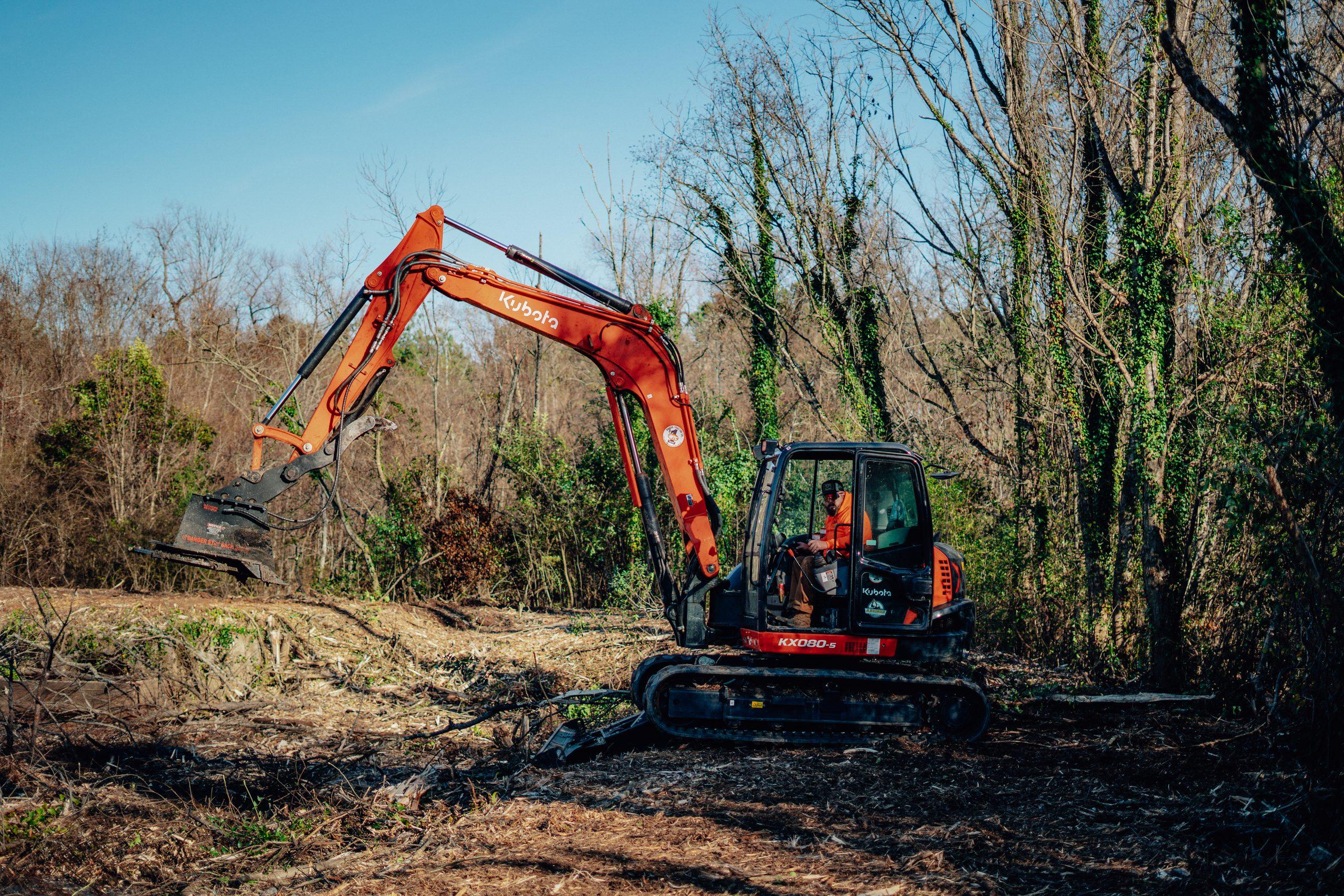
Building a pond starts with clearing the site, then cutting the basin to the design depth and slope. In Cherokee County, that usually means excavating well below the final water line, since ponds lose depth to sediment over time and a shallow starting point leaves little room before the pond needs dredging again.
Key elements of a new pond excavation include:
- Basin shaping: Sloped edges for bank stability, with deeper sections that resist summer algae growth and winter freeze.
- Core trench and dam compaction: For ponds built with an embankment, the dam core needs compacted low-permeability clay, not loose fill, or the pond will seep.
- Spillway sizing: The emergency spillway has to handle the runoff from the entire watershed feeding the pond, not just an average storm.
- Outlet structure placement: A properly set drain pipe lets the owner control water level and empty the pond for future maintenance without heavy equipment.
Skipping any of these steps to save time on the front end almost always costs more in repair work later.
Cherokee County Soil and Permit Considerations
Cherokee County's red clay Piedmont soil is actually a good base for a pond dam when it is compacted correctly, since clay resists water movement far better than sandy soil. The catch is that clay has to be placed in thin, compacted lifts at the right moisture content. Rushed fill work is the most common cause of pond dam failure in this region.
Watershed size drives the whole design. UGA Extension puts the general rule at about 10 acres of watershed for every acre of pond, with closer to 20 acres per acre improving water supply through a drought. Undersize the watershed and the pond struggles in dry years. Oversize it without matching the spillway and the pond overtops in wet ones. Cherokee County averages close to 55 inches of rain a year, so spillways here get tested often, not occasionally.
Land disturbance of one acre or more generally triggers permitting under the Georgia Erosion and Sedimentation Act, a threshold that dropped from five acres to one in 2003. Cherokee County administers that review locally rather than through the state, and the Georgia EPD erosion and sedimentation program sets the standards it enforces. A contractor who has pulled these permits before can tell you during the estimate whether your pond triggers one, instead of finding out mid-excavation. Our guide to Georgia EPD stormwater regulations covers the requirements in full.
Restoring a Pond That Has Silted In
Some Canton ponds reach a point where mechanical dredging cannot keep up. Decades of sediment from an active watershed can fill a basin to the point that only excavation, with the pond drained and the equipment working in dry ground, gets it back to usable depth.
A full excavation restoration typically includes draining the pond, removing accumulated sediment down to the original basin grade or deeper, regrading the banks, and inspecting or replacing the outlet structure. It costs more than routine dredging, but it resets the pond's lifespan rather than buying a few more years.
For ponds that still hold reasonable depth and just need sediment removal, routine maintenance is usually the better first step. Our guide to detention pond maintenance in Canton and Cherokee County covers that lighter-touch work and how to tell which category your pond falls into. If the dam itself is the problem rather than the basin, see pond dam repair in North Georgia for the warning signs that need attention first.
Addison Excavations Builds and Restores Ponds in Canton
Addison Excavations handles new pond construction, full restoration excavation, and ongoing pond management for properties throughout Canton and Cherokee County. See our excavation services in Canton, GA for the full range of sitework we provide in the area.
Every pond project starts with a site visit to assess watershed size, soil conditions, access for equipment, and what the finished pond needs to support, whether that is recreation, livestock, or stormwater detention. That assessment sets the design before any ground gets moved.
Ready to Build or Restore a Canton Pond?
Addison Excavations handles new pond excavation, full restoration, and ongoing maintenance for Canton and Cherokee County properties.